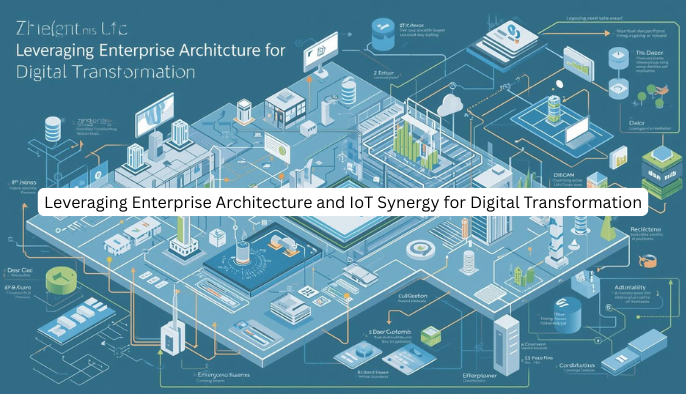
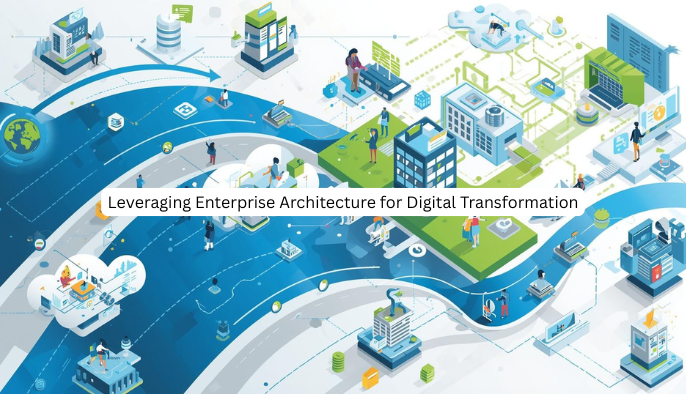
Enterprise Architecture (EA) has evolved into a critical discipline for modern organizations. From the early foundations laid by John Zachman to the maturity of frameworks like TOGAF, EA has helped businesses manage growing complexity, reduce risk, and adapt to rapidly changing technology landscapes.
Enterprise Architecture (EA) has evolved into a critical discipline for modern organizations. From the early foundations laid by John Zachman to the maturity of frameworks like TOGAF, EA has helped businesses manage growing complexity, reduce risk, and adapt to rapidly changing technology landscapes.
At its core, EA provides a holistic, bird’s-eye view of an organization’s IT ecosystem—including systems, applications, data, networks, and security. This unified perspective enables organizations to understand how their digital assets fit together and how technology decisions influence overall business strategy.
Today, EA goes far beyond technical documentation. It plays a strategic role in shaping business direction, supporting executive decision-making, and enabling sustainable digital transformation.
Modern enterprises serve millions of users across diverse industries such as healthcare, financial services, and energy. Their operations rely on a complex mix of applications, data platforms, and infrastructure distributed across on-premise and cloud environments.
As business processes change dynamically, organizations face challenges such as:
Disconnected systems and data silos
Increasing volumes of structured and unstructured data
Multiple access points across mobile and digital channels
Rapid adoption of emerging technologies
EA helps bring clarity to this complexity by organizing application inventories, data assets, system dependencies, and business impacts under a unified framework. This allows leaders to make informed decisions while adopting new technologies without disrupting core operations.
Digital transformation is not a one-time initiative—it is an ongoing journey. Continuous innovation, customer expectations, and technological change demand agility across the enterprise.
Enterprise Architecture enables this agility by:
Aligning business goals with IT capabilities
Providing visibility into current technical maturity
Identifying risks and constraints early
Guiding investment decisions
Supporting long-term scalability
Through EA, organizations can confidently integrate technologies such as cloud computing, IoT, big data analytics, AI, and mobile platforms into their business processes.
Technology evolution has consistently reshaped enterprise architecture—from monolithic mainframe systems to client-server models, service-based architectures, and today’s cloud-native environments.
Each transition introduced greater flexibility but also increased complexity and risk. EA helps organizations navigate these shifts by offering structure, governance, and stability while enabling innovation.
As enterprises move toward cloud-first and AI-driven models, EA remains essential for ensuring that technology adoption enhances—not disrupts—business outcomes.
Enterprise Architecture supports digital transformation in several key ways:
EA documents existing systems and capabilities, creating a clear starting point for transformation initiatives.
By identifying security, privacy, and operational risks early, EA reduces disruption during transformation.
EA bridges the gap between technical feasibility and business vision, ensuring transformation efforts deliver real value.
EA highlights inefficient or manual workflows and enables automation through modern digital solutions.
EA ensures that technologies like cloud, AI, and analytics are aligned with business objectives rather than implemented in isolation.
Frameworks such as TOGAF and Zachman provide structured guidance while remaining flexible to adapt to disruption.
EA establishes feedback loops that support continuous innovation and long-term agility.
Organizations that succeed in digital transformation share common practices:
Integrating security into transformation from the beginning
Maintaining flexible architectural blueprints
Using open-source and cloud technologies strategically
Evaluating multiple solution options before large investments
Focusing on existing digital strengths as quick wins
Rather than pursuing “best practices,” successful enterprises adopt effective practices tailored to their unique business context.
Enterprise Architecture is no longer just an IT discipline—it is a business enabler. By aligning people, processes, and technology, EA helps organizations innovate with confidence, respond to disruption, and build resilient digital enterprises.
At Epitomione, we view EA as the foundation for sustainable digital transformation—empowering organizations to evolve continuously, deliver exceptional customer experiences, and stay ahead in a digital-first world.